| Brand Name: | BABOS |
| Model Number: | SB-3 |
| MOQ: | 20pcs |
| Price: | Negotiable |
| Payment Terms: | L/C,D/A,D/P,T/T,Western Union |
| Supply Ability: | 10,0000 per month |
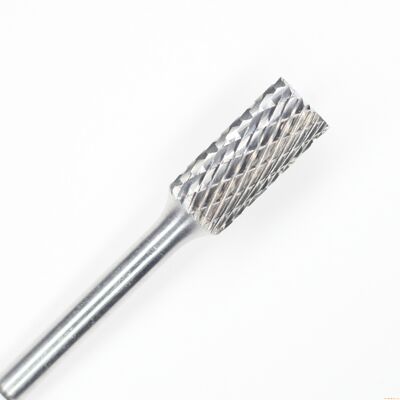
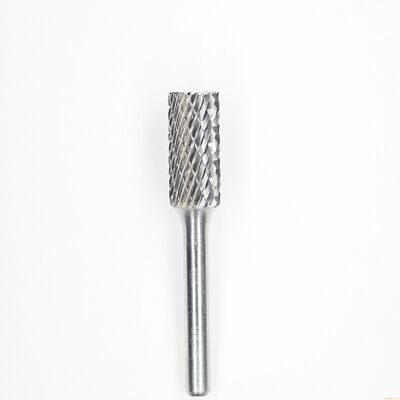
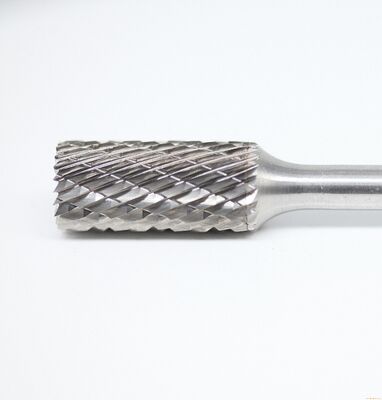
The SB-3 is a 3/8" (9.5mm) cylindrical carbide burr with cutting edges on both the side wall and the end face. That end cut is what separates it from the SA series: the SB-3 can plunge straight into a workpiece and square a flat-bottomed pocket, then profile the wall in the same pass. It is the tool of choice for pocket floors, keyway cleanup, spot facing and weld removal where the bottom of the cut has to be flat.
Why the SB-3 is specified for flat-bottom work
Typical applications
Specifications
|
Field |
Value |
|
Model |
SB-3 |
|
Shape |
Cylinder with end cut (ANSI Type B) |
|
Cut diameter |
3/8" (9.5mm) |
|
Cut length |
3/4" (19mm) |
|
Shank diameter |
1/4" (6.35mm) |
|
Overall length |
2-1/2" (63.5mm) |
|
Cut type |
Standard double cut |
|
Material |
Virgin tungsten carbide, brazed head, hardened steel shank |
|
Recommended speed |
22,000–35,000 RPM |
Working with an end-cut burr
An end-cut burr cuts on two surfaces at once, so it removes material faster than a side-cutting tool of the same size — and it can also dig in if fed too hard. Feed it in slowly until the end face has established a flat seat, then move laterally with light pressure. Keep the tool moving; dwelling in one spot will burnish the workpiece and load the flutes.
Recommended operating speed
|
Head diameter |
Recommended speed |
|
1/8"–1/4" (3–6mm) |
35,000–50,000 RPM |
|
5/16"–1/2" (8–12mm) |
22,000–35,000 RPM |
|
5/8"–3/4" (16–19mm) |
16,000–24,000 RPM |
|
7/8"–1" (22–25mm) |
12,000–18,000 RPM |
OEM, packaging and MOQ
FAQ
Q: When should I use SB-3 instead of SA-3?
A: Use SB-3 whenever the bottom of the cut has to be flat — pockets, keyways, spot faces, weld removal on a plate surface. Use SA-3 when the end must not cut, for example when grinding against a shoulder.
Q: Can the SB-3 plunge cut?
A: Yes, that is its main advantage. Feed in slowly until the end face seats, then move sideways with light pressure.
Q: What speed is safe for a 3/8" head on a 1/4" shank?
A: 22,000–35,000 RPM. Higher speeds increase vibration and the risk of carbide chipping without improving removal rate.
Need the SB-3 in bulk or with your own branding? Send your specification and quantity — samples and OEM packing are available.
Other Available Sizes Related to Type B Carbide Burrs Both in Metric and Inch Standard:
| Metric Standard | |||||
| Shank Dia. (mm) | Cutter Dia. (mm) | Legth of Cut (mm) | Overall Length (mm) | Tool No. | The Combination of Head and Shank |
| d2 | d1 | l2 | l1 | ||
| 3 | 1.5 | 6 | 38 | B1506 | Solid |
| 2 | 11 | 38 | B0211 | Solid | |
| 2.5 | 12 | 38 | B2512 | Solid | |
| 3 | 13 | 38 | B0313 | Solid | |
| 4 | 13 | 51 | B0413 | Brazed | |
| 5 | 13 | 51 | B0513 | Brazed | |
| 6 | 13 | 51 | B0613 | Brazed | |
| 6 | 6 | 16 | 63 | B0616 | Brazed |
| 6 | 25 | 65 | B0625 | Solid | |
| 8 | 20 | 65 | B0820 | Brazed | |
| 10 | 20 | 70 | B1020 | Brazed | |
| 11 | 25 | 70 | B1125 | Brazed | |
| 12 | 25 | 70 | B1225 | Brazed | |
| 16 | 25 | 70 | B1625 | Brazed | |
| 19 | 25 | 70 | B1925 | Brazed | |
| 25 | 25 | 70 | B2525 | Brazed | |
| 8 | 12 | 25 | 70 | B1225 | Brazed |
| 16 | 25 | 70 | B1625 | Brazed | |
| 19 | 25 | 70 | B1925 | Brazed | |
| 25 | 25 | 70 | B2525 | Brazed | |
| Inch Standard | |||||
| 3/8'' | 7/8" | 1" | 2-3/4" | SB-8 | Brazed |
| 1/8'' | 1/16" | 1/4" | 1-1/2" | SB-41 | Solid |
| 1/8" | 9/16" | 1-1/2" | SB-43 | Solid | |
| 1/4'' | 5/32" | 5/8" | 2" | SB-13 | Solid |
| 3/16" | 5/8" | 2'' | SB-14 | Solid | |
| 1/4" | 5/8" | 2'' | SB-1 | Solid | |
| 1/4" | 1" | 2'' | SB-1L | Solid | |
| 5/16" | 3/4'' | 2-1/2" | SB-2 | Brazed | |
| 7/16" | 1" | 2-3/4" | SB-4 | Brazed | |
| 1/2" | 1" | 2-3/4" | SB-5 | Brazed | |
| 5/8" | 1" | 2-3/4" | SB-6 | Brazed | |
| 3/4" | 1" | 2-3/4" | SB-7 | Brazed | |
| 1" | 1" | 2-3/4" | SB-9 | Brazed | |
Customization:
Cut Selection Guide:
| STANDARD CUT(M) |
STANDARD DOUBLE CUT (X) |
WIDE CUT (C) |
FINE CUT (F) |
ALUMINUM CUT(W) |
DIAMOND CUT(D) |